Exploration v exploitation, balancing short-term SEO results with long-term impact
Balancing quick wins against longer-term SEO plays is always a challenge when deciding how and where to allocate resources. Different stakeholders within a client’s business have varying expectations about how long SEO should take to show an impact.
To address this, we balance shorter-term tactics, or “quick wins”, with longer-term initiatives that deliver results over time.
The key is finding the right balance between these approaches and aligning them with business needs, objectives, and market conditions, while factoring in established seasonal trends, audience behaviour, and buying patterns.
This decision-making process involves the explore-exploit trade-off: a balance between gathering new information (exploration) and using it to improve performance (exploitation).
A good example of this in nature is honey bees. Some bees scout for new pollen sources and return to the hive to communicate their findings through a dance. Many bees immediately ‘listen’ and start extracting from the new pollen source, while others ignore the dance and keep exploring new areas. Although these more single-minded bees cost the hive pollen in the short term, their findings often lead to further valuable pollen discoveries that offer greater long-term benefits.
Let’s discuss how you can apply the principles of exploration vs exploitation in your own SEO strategy to help you focus on long-term growth without missing those all-important quick wins.
Exploration vs exploitation in SEO strategy
In SEO, the explore-exploit trade-off is far more complex than in many industries (or in beehives) because of the sheer range of variables involved. And right now, SEO is in a state of instability.
Family therapist Virginia Satir’s Change Model describes how people and systems move through change: from the late status quo, through resistance and chaos, to integration and a new status quo.
Currently, much of SEO has left the old status quo and is moving through resistance toward that chaotic middle stage, largely because AI is changing how people ask questions and how answers are packaged. It’s why we’ve also evolved our content strategy for generative AI search.
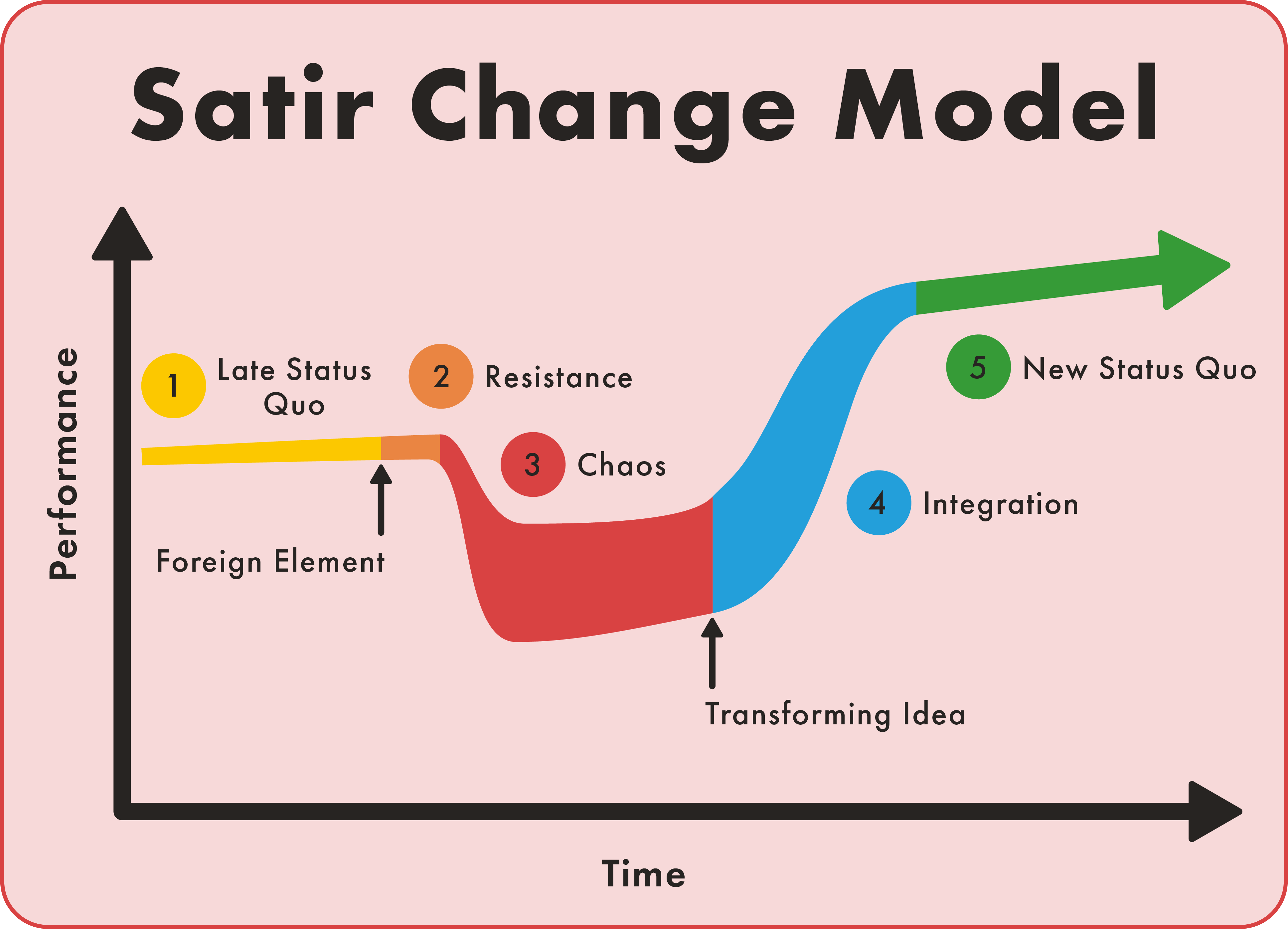
Typically, the time to exploit is when you’re confident that tomorrow will look much like today.
In exploitation mode, businesses focus on reinforcing their market position, optimising current traffic, and improving operational efficiency. But we’re now in a turbulent period, characterised by significant market disruption and rapid technological change, driven primarily by AI.
The adoption data backs this up. In February 2026, half of US employees told Gallup they use AI at work in some capacity, and Google says its AI Overviews now reach more than 2.5 billion people a month. AI is well past the early enthusiasm stage and is now fully integrated into everyday use, so the practical question for SEO teams is no longer whether to adapt, but how.
Earlier shifts in knowledge work, such as the move to spreadsheets or the internet, unfolded over years. Generative AI has compressed that learning curve into months or weeks, further increasing the need for urgency.
The role of SEO testing
In this landscape, SEO testing has become even more important. Part of every plan should still ring-fence short-term tactics that exploit what already works, technical fixes, intent-aligned content, and conversion paths, so current performance funds exploration. Alongside that, we recommend prioritising growth forecasting and structured tests of new approaches, so every exploration has a clear success measure before anything is scaled.
The goal of exploration isn’t just to find lots of winning strategies, but to identify points of leverage that were previously unknown or underused. Once you’ve identified a leverage point, you can shift into exploitation mode, testing and refining it rigorously to drive quick wins.
However, businesses should never abandon exploration, even when they find new variables to leverage for growth. It remains an essential part of the process.
In our experience, businesses often underestimate the headroom in specific audience segments and miss insights that could redefine their customer base. A continuous cycle of exploration and exploitation keeps your SEO strategy adaptable as the landscape changes.
Finding your variables to improve SEO performance
In the exploration phase, the aim is to identify the variables you can leverage and exploit to create the most opportunities for growth. But that doesn’t mean hunting for the variable straight away. Start by identifying the areas you can refine, and the variable will emerge from that work.
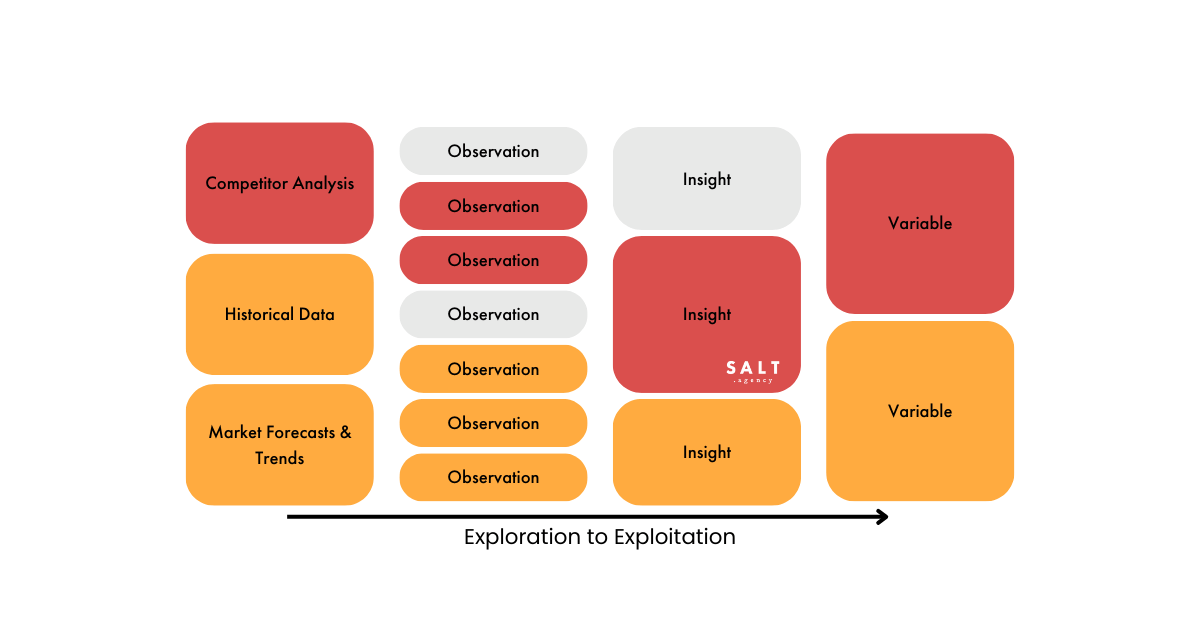
Don’t move from explore to exploit at the first opportunity you find, either. You need a steady pipeline of opportunities to maintain momentum. You may also find that you make the same observations from different data sources, and that these lead to shared insights and actions. It isn’t a linear 1:1:1 system, where one analysis equals one observation, one insight, and one variable (action).
Make exploration a standing line item
SEO is a balancing act between short-term wins and long-term gains. The explore-exploit trade-off guides that decision-making, so you’re not investing every resource in existing opportunities while still discovering new ones.
With AI reshaping search and user behaviour, treat exploration as a standing line item rather than a side project. Schedule tests against named AI surfaces – for example, running a competitor analysis in AI search. Forecast the impact before you scale, then lock the winning variables into your exploitation roadmap.
Businesses that keep that cycle going will be best placed to sustain growth in an unpredictable market. If you need help balancing the two, find out more about our SEO strategy and AI search optimisation services.


