A Strategic Guide to Luxury Travel SEO
The global luxury travel market is a thriving and rapidly growing sector, generating an estimated $1.5 trillion annually. But the industry’s boom in recent years has also made it more competitive than ever, with new luxury brands constantly popping up with promises of unforgettable high-end holidays designed to entice the more discerning traveller on the lookout for experiences and value.
In this market, being discoverable is key. And that all comes from a strong search strategy designed to make your brand visible in the moments when users are looking to research or book.
In such a competitive space, however, simply being visible alone isn’t enough to stand out and make a real, long-term difference. Ranking for more keywords is always a plus, but for luxury travel brands, SEO also needs to earn trust, build a feeling of exclusivity, and deliver a seamless user experience from a customer’s very first interaction.
In this guide, we look at how to build and execute a luxury travel SEO strategy that shapes your brand’s perception and credibility, as well as capturing high-intent demand in an increasingly crowded and algorithm-driven search landscape.
How luxury travel is evolving, and why SEO matters
The definition of luxury travel has shifted significantly over the last few decades. In the latter half of the 20th century, as methods of travel such as commercial flights became more accessible to the masses, luxury meant first-class flights, private lounges, and five-star hotels. Although these still play a part, many holiday-goers are increasingly prioritising once-in-a-lifetime experiences over chic amenities, looking for more for their money in terms of life changing things to see and do.
In a recent speech at the International Luxury Travel Market, Marriott’s President of Luxury, Tina Edmundson, said that Millennials and Gen Z value personalisation, uniqueness, and cultural depth above the material luxuries of years gone by alone.
They also tend to research far more extensively before committing, which means brands need to do more to not only be seen, but to build authenticity, authority, and trust. With these generations set to inherit $80 trillion globally over the next two decades, high-end travel brands need to ensure they’re repositioning to cater to them as the next core luxury market.
Why SEO works differently in luxury travel
Traditionally, SEO in the travel industry (and beyond) has been about chasing high-volume keywords and improving your brand’s visibility in search results. Doing so means that when someone is searching for flights, a holiday, or an experience, you’re front and centre. For many industries this works as a core approach.
Luxury travel, on the other hand, places more of an emphasis on aligning search strategy with brand positioning. Luxury consumers are highly selective, and choose brands that feel credible, refined, and trustworthy.
At a strategic level, luxury travel SEO should:
- Protect brand perception across search touchpoints
- Capture high-intent demand without commoditising the offering
- Support longer consideration cycles typical of luxury purchases
- Reinforce trust, authority, and expertise at every stage of the funnel.
Unlike mass-market travel, success in luxury travel is rarely measured purely on traffic growth. Quality of traffic, depth of engagement, and assisted conversions are often more useful indicators of where your SEO strategy is effective.
SEO challenges facing luxury travel brands
Many travel brands build content-rich, technically proficient SEO foundations, but still face challenges because their strategy is misaligned. You need to ensure you’re avoiding some of the more common pitfalls that exist in the sector.
Common issues include:
- Creating generic content that fails to differentiate the brand
- Keyword strategies that prioritise volume over intent and value
- Websites that look fantastic but underperform technically
- Relying on paid media while organic visibility stagnates.
To overcome these challenges, a holistic, robust SEO strategy is required. Let’s look at some key tips for luxury travel brands that need their SEO to help them stand out in a saturated market.
Core components of an effective luxury travel SEO strategy
An effective luxury travel SEO strategy is built on a small number of high-impact components that work together to protect brand equity, demonstrate authority, and capture high-value demand at every stage of the funnel. Here are some of the most important aspects to consider.
Content strategy for luxury intent
In luxury travel, effective content is one of the most important channels brands have to convey expertise, shape perception, and guide high-value users through a longer, more considered decision-making process.
Authority-led content that evidences expertise
High-quality content is the baseline – authority is the real differentiator. Authority-led content that evidences expertise can help you really stand out from your competition.
Content should go beyond surface-level guides and demonstrate real expertise. Luxury brands that do this well often:
- Create destination content written or reviewed by specialists
- Share insider perspectives rather than generic recommendations
- Focus on why an experience is exceptional, not just what it includes.
For example, Abercrombie & Kent’s destination content, like this guide to Botswana, consistently positions the brand as an authority, using descriptive and emotive language to weave together history, culture, and expertise rather than plainly describing locations.
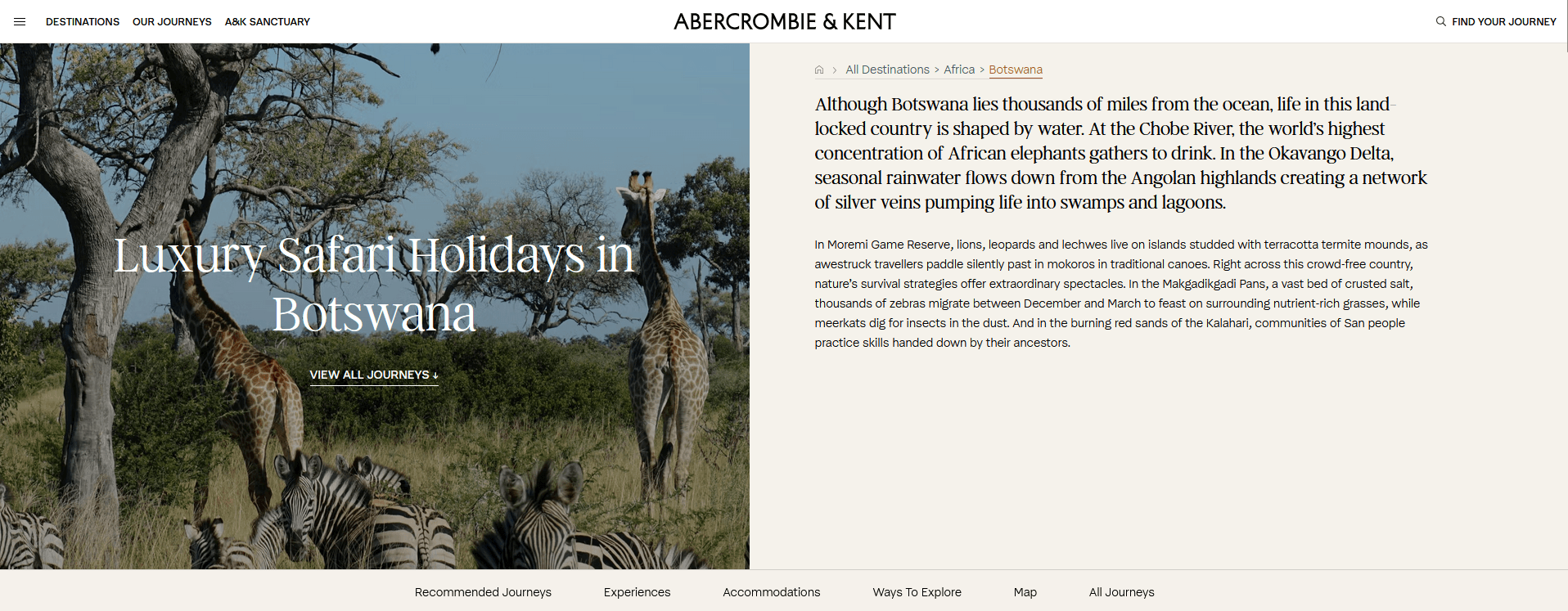
Keeping the content consistent with the user’s expectations is key. You want to choose keywords to target that align with what users are likely to be searching for when looking for quality. A luxury travel user would be unlikely to search for terms like “cheap boat rental Croatia”, but would be farm more likely to search for something like “bespoke safari Botswana” or “private villa Tuscany”. These reflect luxury intent far more clearly than broader, mass-market travel keywords.
Informational content that supports consideration
Informational content plays an important role in luxury travel SEO, particularly given the industry’s longer customer research cycles.
Rather than chasing high-volume blog topics, informational content should be designed to answer sophisticated pre-purchase questions users actually have, reduce perceived risk, and reinforce brand credibility, moving them further down the funnel towards conversion.
Examples can include detailed guides to the best times of year for specific experiences, comparisons between similar destinations from a luxury perspective, or behind-the-scenes explanations of how itineraries are curated.
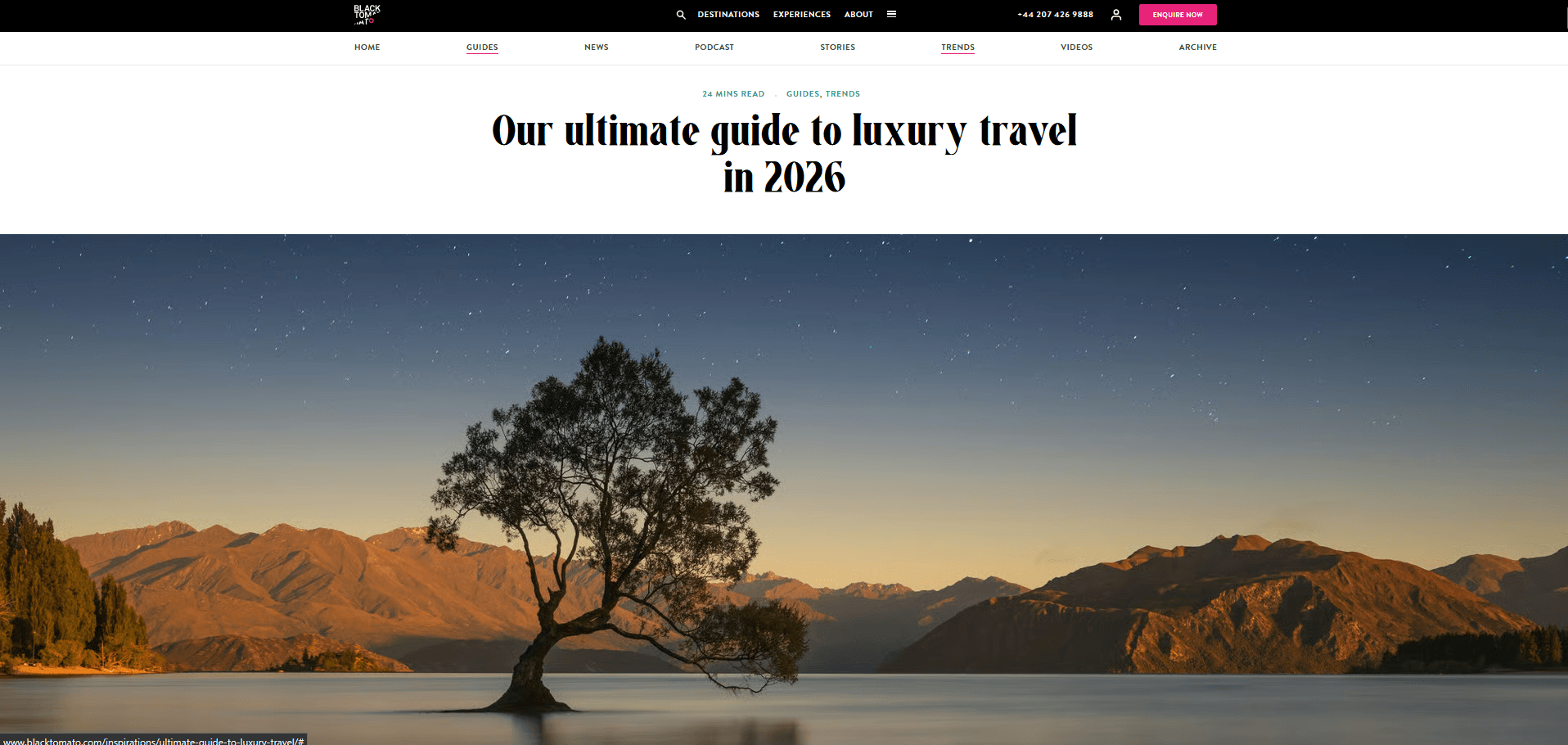
Brands like Black Tomato excel here by producing editorial-style content that feels more like a premium magazine than a traditional blog, while still aligning closely with search intent. Its ultimate guide to luxury travel in 2026 is an in-depth 24-minute read, providing comprehensive coverage of destinations all over the world.
Commercial content that sells with sophistication
Commercial pages for luxury travel brands need to convert without compromising brand tone by feeling overly pushy or salesy. Displaying clear signs of the brand’s expertise in the field also helps to cement the user’s trust. Luxury consumers especially expect perfection, so it is important that this content is flawless.
Luxury consumers expect impeccable UX and copy consistency, clear articulation of what makes the experience worthy of the “luxury” label, and evidence of unique expertise, partnerships, or access to the destination.
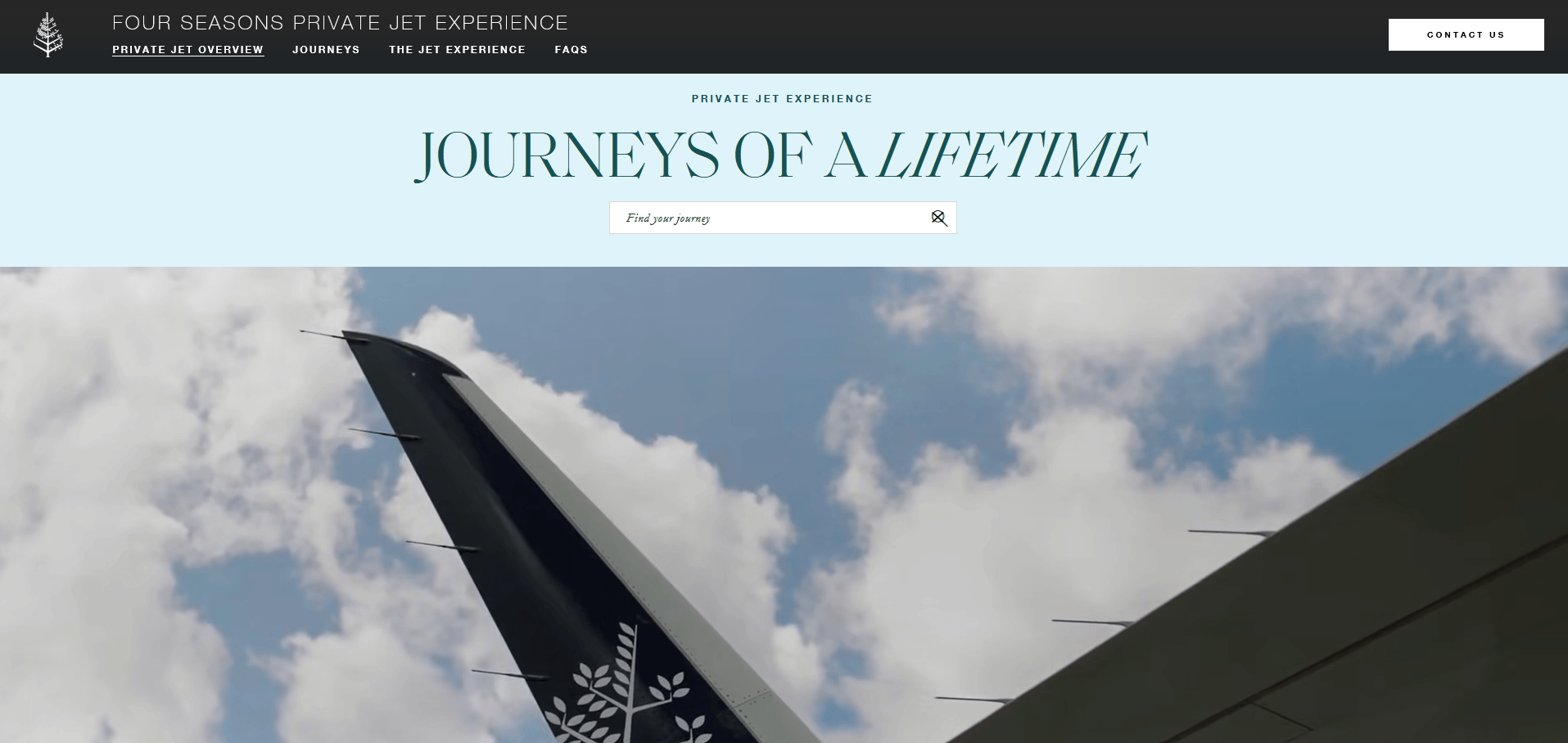
Brands like Four Seasons execute this exceptionally well, combining SEO performance with premium UX and polished destination-led experiences. Its private jet experiences are a great example of this.
The brand’s content perfectly conveys why the experience is so special without pushing to convert – the next stage in the funnel is kept as minimal as possible, with one small “Email us” button at the bottom of the page.
Digital PR to build connections
In addition to blog and commercial content, digital PR can also support the creation of high-quality content.
Whether through infographics, expert commentary, newsjacking, or other methods, these can all contribute to the brand’s image and level of trust with luxury consumers.
Technical SEO considerations
The technical side of your site can be just as important, if not more, than the content side. Users want a site to work quickly and without issue. For luxury travel brands, user experience can have a significant impact on perception of brand quality, trust, and attention to detail, with technical SEO providing the foundation for that experience across every touchpoint.
User experience as a strategic priority
While not directly related to SEO, user experience contributes to the overall opinion luxury users have of the brand. This can be enhanced through tactics like:
- Logical site architecture – content and experiences should be organised around clear user journeys, making it easy for both users and search engines to understand how destinations, itineraries, and services relate to one another. A user should be able to move through the funnel and go from investigation to conversion without any friction, making logical decisions along the way that deliver the expected outcome.
- Intuitive navigation – menus and internal links should guide users naturally to relevant information without forcing them to think, search, or backtrack.
- Clean, distraction-free page layouts – layouts should prioritise imagery, copy, and calls to action without clutter, reinforcing a calm, premium browsing experience.
When conducting a technical audit of your brand’s website, consider the user journey as well as crawlability.
Mobile-first, but not mobile-only
Customers in many industries primarily research on mobile, but often convert later, via desktop or through direct contact, and high-value industries like luxury travel are no different. This makes it vital for luxury travel brands to consider how their site performs from a mobile perspective. While sites are primarily built and maintained from a desktop, considering the mobile user first can go a long way towards satisfying the high standards of website performance that luxury users expect.
A mobile-first approach should consider:
- Page speed on mobile networks – pages should load quickly even on slower connections, so users can explore experiences without interruption or frustration.
- Readability and visual hierarchy – the site’s spacing, typography, and layout should make key information easy to scan and absorb.
- Responsive design across screen sizes – ensure layouts, imagery, and navigation work equally well on mobile and desktop, without elements becoming unreadable, misaligned, or difficult to use.
Responsiveness should be monitored continuously, particularly for image-heavy pages common on luxury travel sites.
Performance and Core Web Vitals
Site speed and performance are critical in saturated search landscapes like luxury travel, both from both a UX and search perspective.
From a UX perspective, a fast site speed allows users to navigate the site quickly without waiting for clunky and unresponsive pages to load. Research by Google found that over 50% of users will leave a site if it takes more than three seconds to load – a huge factor in the luxury market, where customer bases are smaller and time is highly valued.
From a search rankings point of view, site speed also contributes to overall Core Web Vitals (CWV) scores. Google uses these as a “tiebreaker” in rankings, which can be the difference between your site and a close competitor appearing at the top of SERPs, which can impact your traffic and overall success.
Key takeaways for luxury travel SEO
In SEO for luxury travel brands, being chosen is just as important as being found. Rather than focusing solely on optimisation, brands also need to ensure that their search strategies support their brand promise, customer expectations, and commercial objectives.
As Millennials and Gen Z redefine luxury through experiences rather than possessions, brands must adapt their visibility strategies accordingly. Brands that invest in authority, experience, and technical excellence will be best positioned to win visibility and trust in a rapidly growing and evolving market. Through a well-planned SEO strategy, luxury travel companies can ensure their sites are best placed to meet those expectations.
Let SALT.agency help with your luxury travel SEO strategy
At SALT.agency, we work with luxury travel brands to build search strategies that support long-term brand positioning, user intent, and revenue growth.
If you need support with your SEO strategy, get in touch with our expert team today.


