How AI Mode affects travel companies
The way jet-setters connect with travel brands continues to change fast. The travel sector has faced disruption from Google for many years. The introduction of special SERP features such as the Flights and Hotels modals and, more recently, AI Overviews has required travel SEOs to adapt their approach.
When coupled with increased adoption of other LLMs and AI platforms, such as Meta AI and ChatGPT, the travel industry has no choice but to transform its strategies in response. According to ABTA’s Holiday Habits 2025-26 report, the number of travellers using AI to plan and book their trips doubled year-on-year. Experimentation with AI, in all its forms, to organise holidays is only set to grow.
Google’s AI Mode has disrupted the travel sector since its launch in May 2025, and it continues to do so following the integration of the “Personal Intelligence” feature in early 2026. Other Gemini-powered applications, such as Canvas, add to the mix with features that include helping generate complete trip itineraries.
AI tools offer another route for holidaymakers to find information, plan, and book everything related to their travel plans – hotels, transport, restaurants, things to do, and even entire trips. AI Mode has greatly impacted the travel industry already, so knowing what it surfaces and how to succeed in AI search is key for every travel brand.
How is AI Mode different for travel queries?
The easiest way to understand how AI Mode is different for travel queries compared to traditional search is with a real example. Let’s look at one of the highest demand outbound cities currently being searched for in the US (according to Google) – San Juan in Puerto Rico.
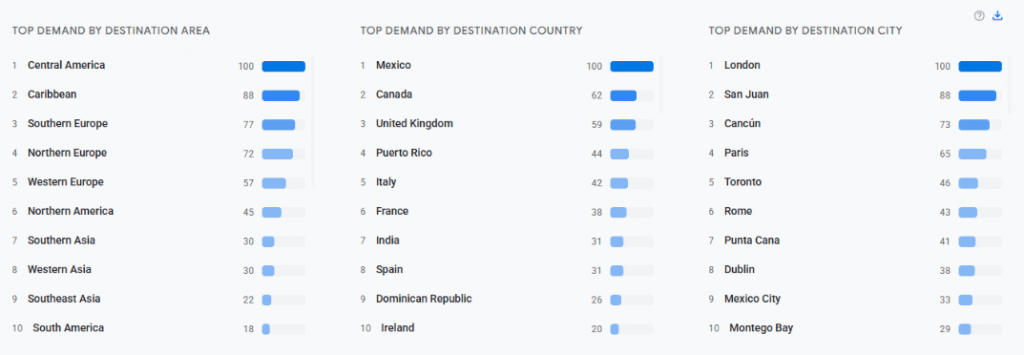
These are three queries with good search volumes for travellers researching San Juan as a destination:
- what to do in san juan puerto rico
- where to stay in san juan puerto rico
- best time to visit puerto rico san juan
Let’s look at how AI mode responds to each of these.
[what to do in san juan puerto rico]
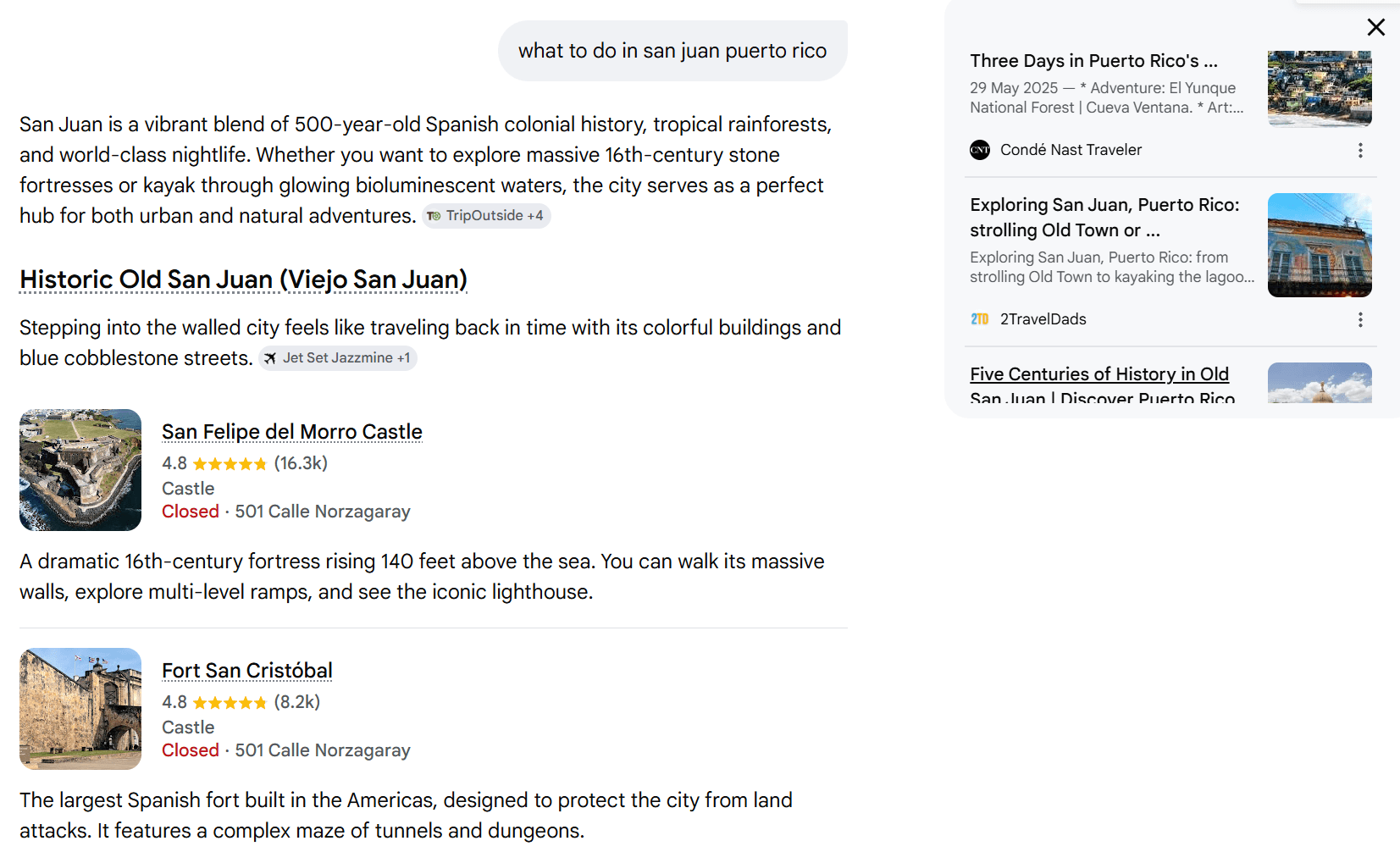
The delivery format is very similar to an AI Overview. It’s fast and pulled information from 21 different websites, although TripAdvisor and Princess Cruises were cited twice with different URLs, and Discover Puerto Rico three times.
While it cites 21 websites, it blends content from multiple sources to provide a response. The “Dining & Nightlife” section pulls from three different websites: Discover Puerto Rico, Jet Set Jazzmine, and Gypsy With a Day Job.
The page referenced from the Gypsy With a Day Job website ranks in traditional organic search for zero queries related to San Juan and “food”, “dining”, and “nightlife”. However, it ranks highly for traditional keywords related to “itinerary”, “things to do”, and “places to explore”.
By contrast, the Discover Puerto Rico website ranks in position one (in the US) for searches such as “nightlife in old San Juan”, “things to do in San Juan at night”, and searches about the drinking age and best party places in San Juan.
If we look at the traditional SEO metrics for the cited URLs, we can see patterns supporting the notion that Google’s Hidden Gems play a part in the formation of results. This was a Google update aimed at prioritising content that’s real and authentic based on first-hand human experiences above generic SEO-optimised content.
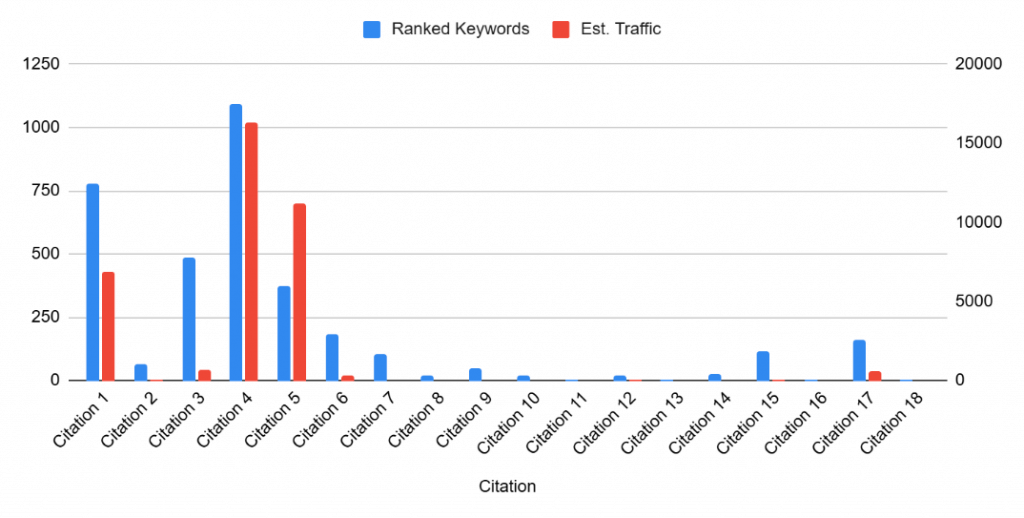
Not all URLs cited are performing well by classical SEO metrics. A third of the cited URLs, according to Ahrefs, aren’t generating any organic traffic at all, and the Domain Rating varies from 1.8 to 95. This breadth of results is down to query fan-out.
Query fan-out is a process used by Google’s AI-powered search to better understand and answer user queries. Instead of just searching for the exact query you typed, the AI breaks it into several related sub-queries, runs those in parallel, and then combines the results into a more complete and helpful answer.
This allows it to pull useful information even from pages that don’t rank highly in traditional search results.
[where to stay in san juan puerto rico]
We can see similar patterns with the ‘where to stay’ query. Google AI Mode pulled information from 25 sites, including three different URLs from Tripadvisor and two each from Condé Nast Traveler and Reddit. Citations are from a mix of established travel brands like Expedia and Lonely Planet, local sites such as PuertoRico.com, and social sites including Reddit, YouTube, Facebook, and TikTok.
The response, however, includes various elements to add value for the user, such as recommending specific hotels based on the ‘vibe’ of the hotel and the surrounding area.
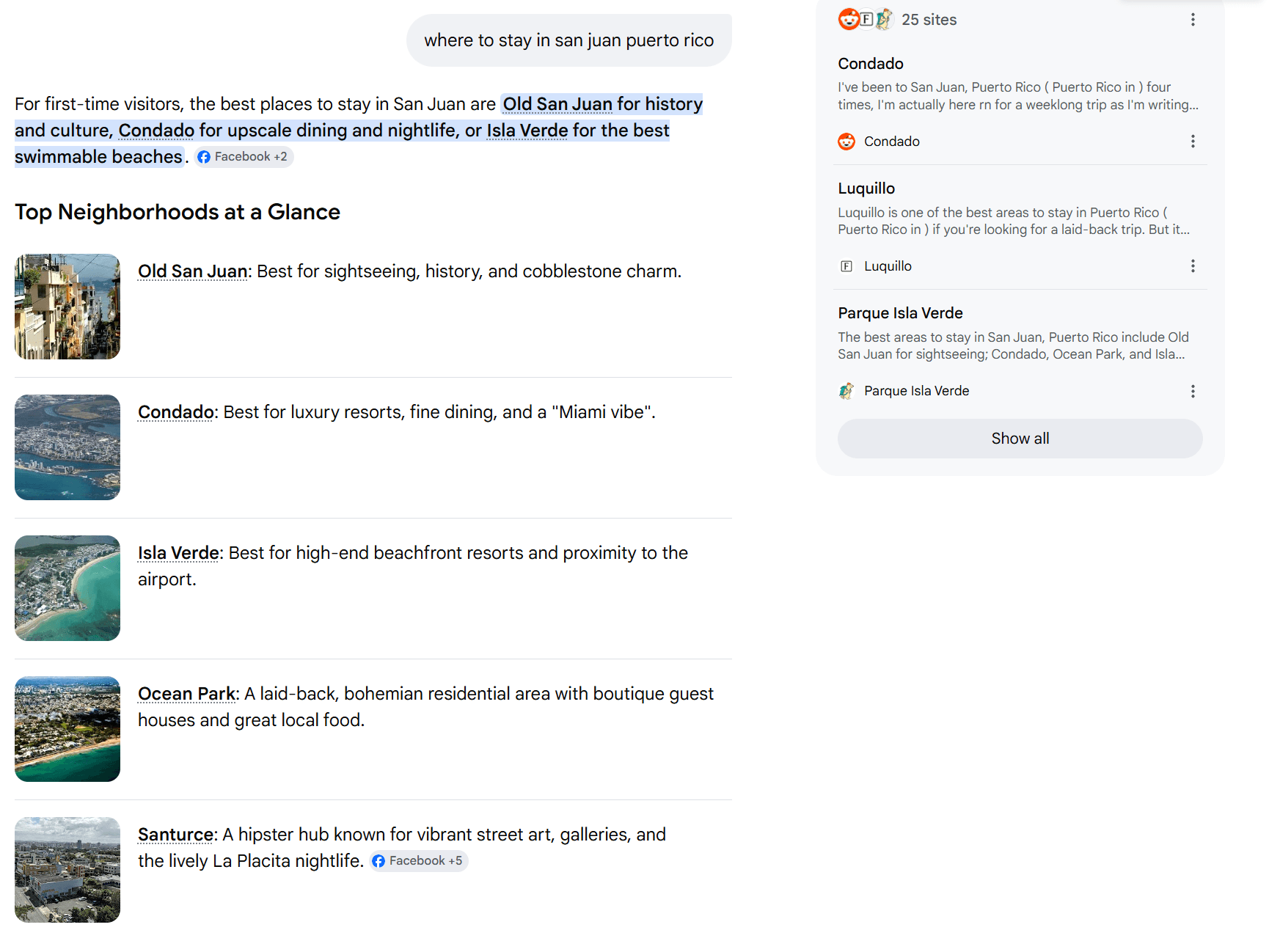
In addition to mapping out the hotels, a tip calling out specific booking and accommodation websites is included.
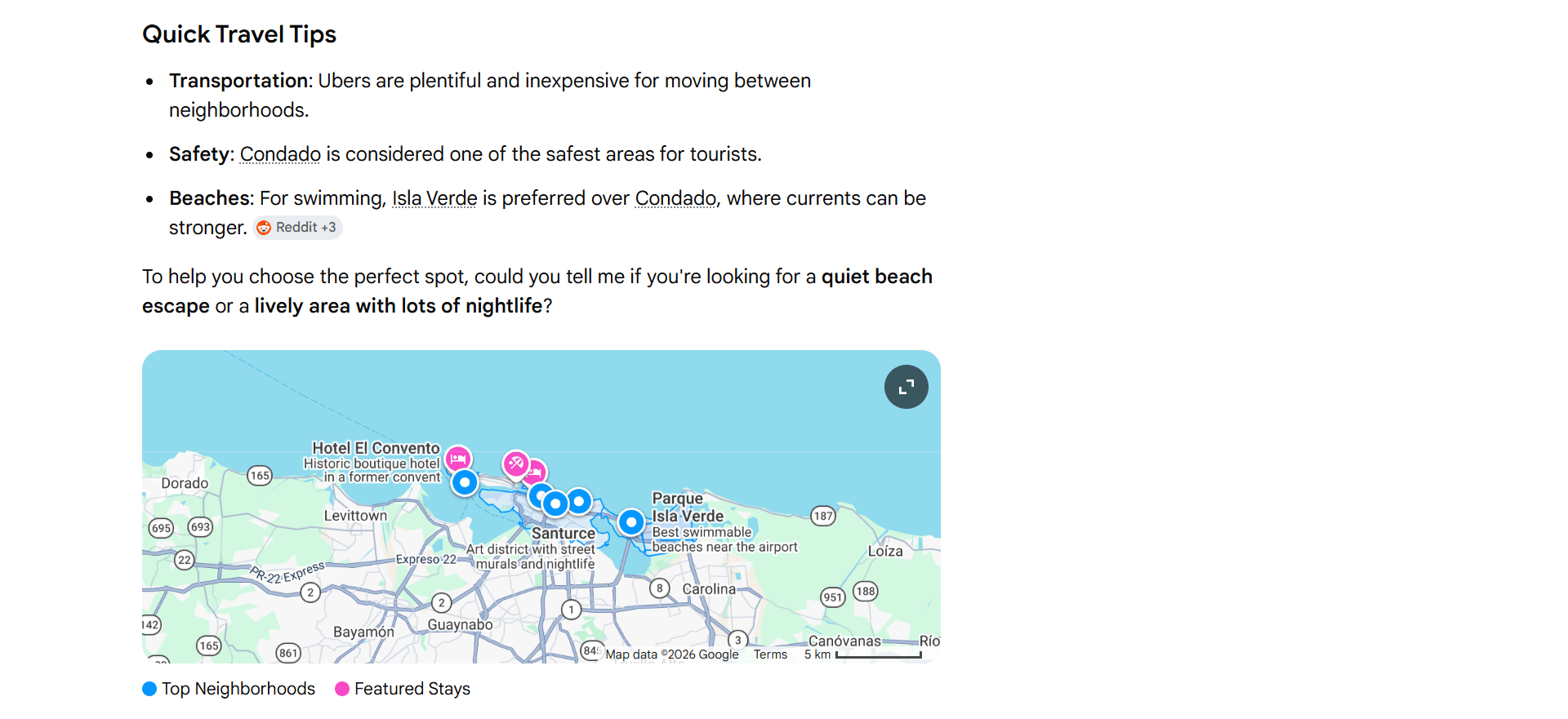
The ‘best time to visit’ query had similar responses.
Hotels queries in AI Mode
Much like in AI Overviews, Google has a habit of linking back to itself in AI Mode. This is apparent when you search for hotel-related information. For example, looking for “hotels in rouen” provides a few options broken down by star rating alongside the map feature.
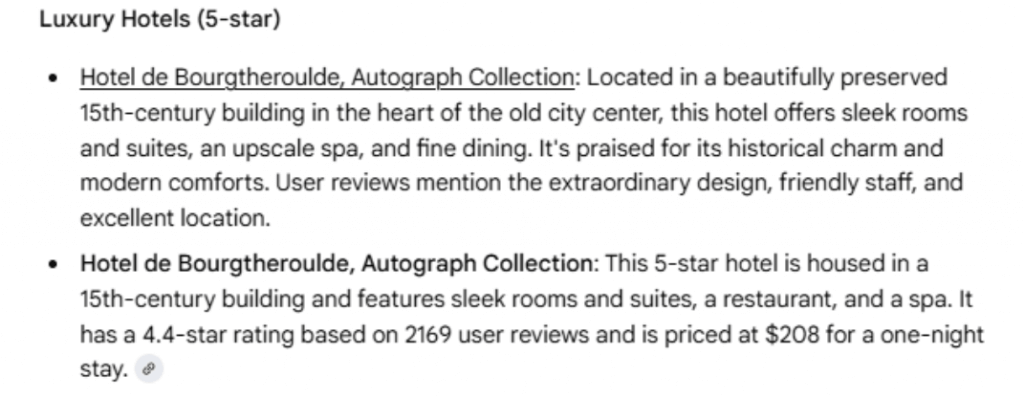
The first result, among others, is hyperlinked, but not to the hotel website. Instead, it pulls through the Google widget for searching and booking the hotel on the site directly – or on aggregator websites.
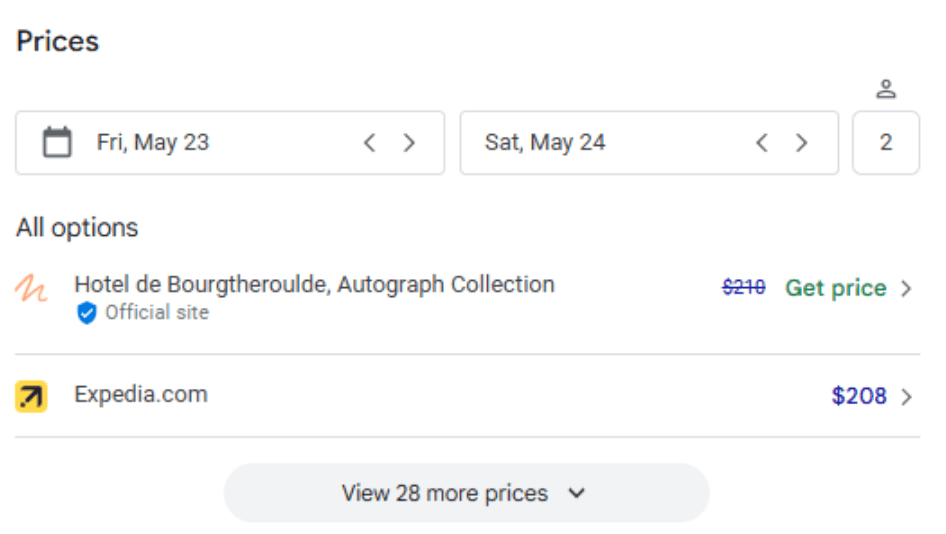
By presenting results in this format, Google is further creating distance between the travel customer and the brand, while retaining users in their ecosystem. You can see the challenge for SEOs.
Canvas and Bookings in AI Mode
The use of AI Mode for travel continues to expand as other Gemini-powered applications are being integrated. Canvas can generate a tailored itinerary within AI Mode from a few simple details, such as where someone wants to go and what recommendations they need. Users can select the “Create Canvas” option to devise a relevant itinerary.
Follow-up questions can refine the itinerary or compare options in greater detail to help travellers find the best option for their needs. Experience and activity platforms like Viator and Get Your Guide that have their own itineraries are seeing success in AI Mode as they provide information for the “things to do” layer of AI-generated itineraries.
AI Mode’s agentic capabilities are further reducing clickthrough to websites for travel brands by enabling direct restaurant reservations. Hotel bookings and flights are set to follow as Google establishes partnerships with the likes of Booking.com and Expedia.
How can travel brands achieve success in AI Mode?
Travel brands need to recognise that search behaviour is changing. Users are increasingly relying on tools like Google’s AI Overviews, Gemini, and now AI Mode to research, plan, and book holidays. Many travel companies are already shifting their strategies and capitalising on the opportunities AI Mode has introduced.
Knowing what it cites and the tactics to employ that improve the chance of your travel brand being surfaced in AI Mode is key to success.
Experience-led over keyword-led content
To succeed in AI mode, travel brands’ content strategies must move from keyword targeting to experience targeting. Rather than creating pages around terms like “hotels in Barcelona”, brands should publish content to help users imagine what their trip will be like.
This means addressing intent-rich prompts such as “quiet beach towns near Lisbon for couples” or “three-day food itinerary in Osaka”. Capturing the emotional and sensory aspects of travel – what it feels like to arrive in a new place – makes content more compelling for both people and language models. This is a concept called User Experience Forecasting.
Enriching content with imagery and user validation shows authenticity and underlines expertise and the ability to deliver the experiences promised.
Travel companies also need to rethink how they present destination guides, hotel write-ups, or itineraries. Content needs to feel lived-in and personal, with less focus on generic SEO copy and more on user experience and local insight.
Brands should consider incorporating traveller reviews, staff recommendations, and behind-the-scenes perspectives.
Truly local content considerations
Focusing on generic terms like “Iceland holidays” isn’t enough for many travel brands to move the needle today, especially since big brands still dominate many traditional search results. Creating truly insightful content that covers local and seasonal considerations offers a surfacing opportunity for smaller travel brands in AI Mode.
Queries and prompts are becoming more specific, and the information pulled out and cited includes that from smaller, niche, and local sites. Taking a new yet valuable angle for content, or focusing on a specific season or event and demonstrating real knowledge can help stamp your authority on it and improve your chances of appearing in AI Mode.
For example, Hertz Iceland increased its share of voice by 70% in AI Mode by shifting from being an authority on Icelandic driving conditions to a focus on winter driving in Iceland aimed at visitors. Through prompt tracking and AI analysis, they identified opportunities to build content around specific local and seasonal topics covered in AI Mode.
This included creating content about car rentals in Iceland that come with winter tires, car rentals offering the best SUVs for Icelandic terrain, and vehicles recommended for winter Iceland trips. Combining AI Mode analysis with local insights and angles around travel helped increase the brand’s surfacing in AI Mode.
Clear specialisms
AI Mode provides curated and personalised responses to prompts and queries, delivering the most relevant answers and helping with any follow-up questions. These can quickly become quite niche when holidaymakers are looking for accommodation options in a certain town for a set week, and within their budget, for example.
This is already changing how travellers research trips, narrowing their search from the start to focus on their specific requirements, for efficient and faster user journeys. To appear within answers for these mid and bottom of the funnel searches, travel brands need to focus on ensuring their brand sentiment and authority are clear within their specialist areas of expertise.
Focusing on high-quality content in a specific area of travel where your brand excels increases the likelihood that your site will be surfaced in AI Mode. For example, if you sell walking holidays in France, then creating relevant supporting content around walking tips, packing guides, and routes for walkers of different ages and abilities helps make your specialism clear to readers and Google.
This is where using content hubs can help devise and deliver a strategy that’s more beneficial for Google and AI Mode than simply producing another generic guide to the best holiday destinations in France. For smaller travel brands, especially, highlighting and making your area of expertise clear can open up more opportunities within AI Mode.
Hidden Gems slowly move front and centre
Google’s Hidden Gems update was rolled out in November 2023, and for the most part hasn’t impacted travel SERPs. However, the data we’re seeing from AI Mode citations for travel queries indicates that smaller, challenger brands may have an opportunity to gain visibility against larger travel companies.
By traditional organic metrics, a number of the sites we’re seeing in citations don’t have metrics to match the bigger travel sites. They do have hyper-relevance and unique content. That focus on specific topics is helping them to surface in the AI Mode results.
Multimodal approach
High-quality images have always been important for travel content, but AI Mode seems to prioritise visual and engaging content, so it’s now even more important. Stock images aren’t enough. Sites that use unique and good-quality images within their content have a greater chance of being surfaced.
Videos are also important as AI Mode uses YouTube and social media sites as sources. Creating travel content beyond just plain text makes your brand more engaging for users and Google, demonstrating authority across multiple platforms rather than putting all your eggs in one basket.
Technical SEO is still important
Technical SEO is key for travel brands to appear in Google’s AI features. Google must be able to find, crawl, and index webpages without issues. Helping provide positive webpage experiences through good page loading speed and aligning with Core Web Vitals is essential.
It also allows brands to manage how their content appears in AI results through controls like nosnippet or noindex. It also helps unlock rich features by using structured data that matches what users actually see on the page.
AI Mode actively compares options, so having correct schema markup for aspects such as pricing, timings, reviews, availability, and deals is vital to appear and compete.
It’s obvious that travellers are embracing new ways to search, and that’s not going to change. The job for travel brands now is to embrace Google’s new direction towards experience-led, relevant content while continuing to be vigilant with technical SEO practices. It’s the winning combination to keep your brand front-of-mind when people plan their next trip.
Stay ahead with our expert SEO travel services, and for further help refining your travel brand’s strategy, get in touch today to discuss your needs.


