Google Search Console follow-up AI interactions in query reports
A major frustration that I have had alongside most of the SEO industry revolves around how Google have bundled their AI prompt data alongside traditional search performance data in GSC.
Whether or not a significant volume of prompts will even be surfaced appears to have remained an unclear data point, given that studies as recent as 2025 from Ahrefs revealed Google were hiding approximately 46% of query data, or as Google’s official documentation has labeled it, anonymised query classification.
This directly contradicted Google’s language use of the time suggesting this occurrence was very rare and limited to “some” queries, as 46% represents a figure vastly greater than “some”.
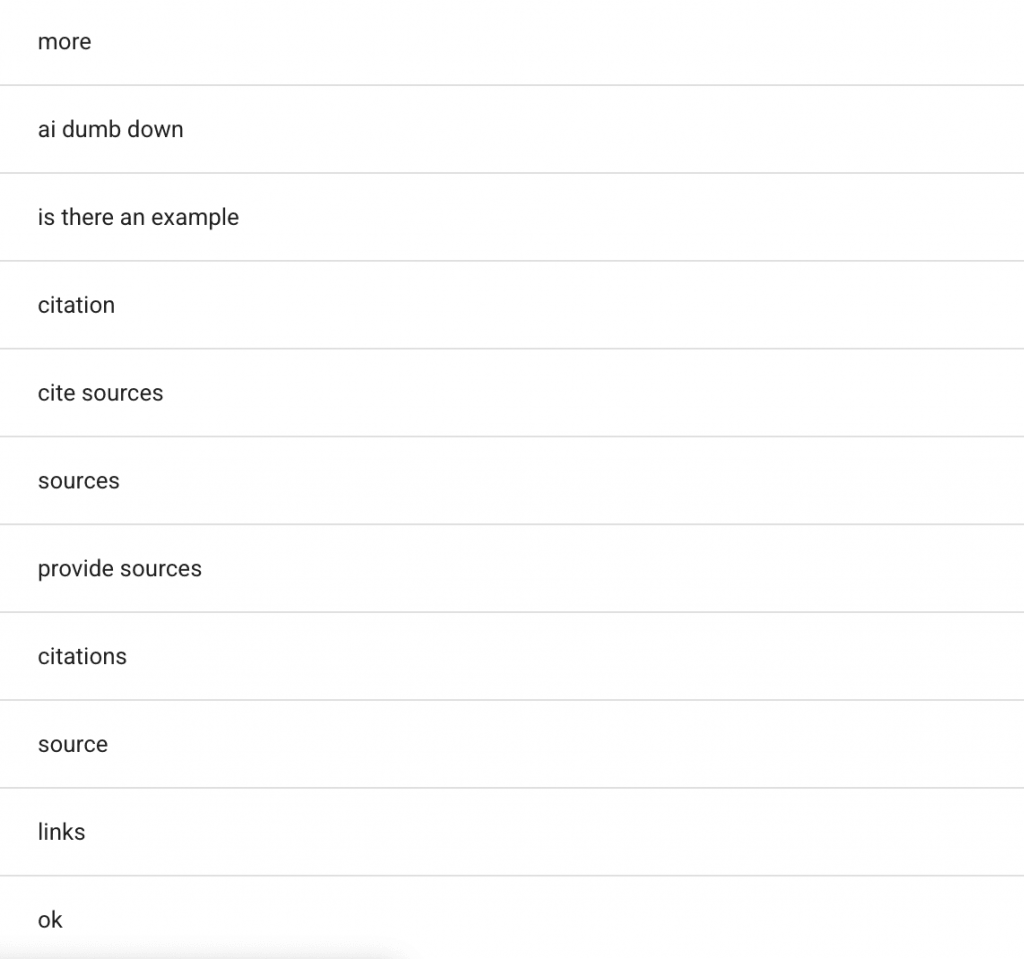
Which is why the fact we’re beginning to see an increase of follow-up engagement being logged in GSC as surprising, although they currently appear in small numbers and vary greatly between different websites with very little rhyme or reason behind the data we are pulling.
Given that prompts are heavily personalised and unique to individual users as part of what we term “infinite tail” queries, the probability of having 30 logged-in unique individuals repeat the exact same prompt over that timeframe reduces drastically.
If we think about why a query would need to be anonymised, it starts to make sense that follow-up engagements are being passed through as what we’re entering the query stacking midway, so we don’t actually know the origin query (or prompt). So this could be a second set of “rules” in the filters for surfacing in GSC for stacked engagements.
Follow-up engagements
Whether that involves requesting further explanations, summarising, dumbing down complex concepts, or expanding upon examples, all of these serve as behavioural cues indicating whether synthesised AI responses are effectively meeting the same “Needs Met” criteria that Google’s Search Quality Rater Guidelines have propositioned for over a decade.
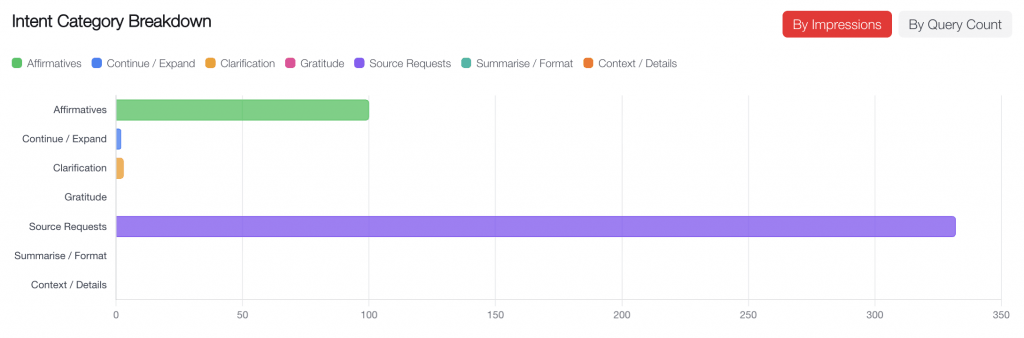
We categorise these specific queries into seven distinct buckets, these being:
- Affirmatives
- Continuations/Expansions
- Gratitude
- Source Requests
- Summarise/Format For Me
- Additional Context/Details
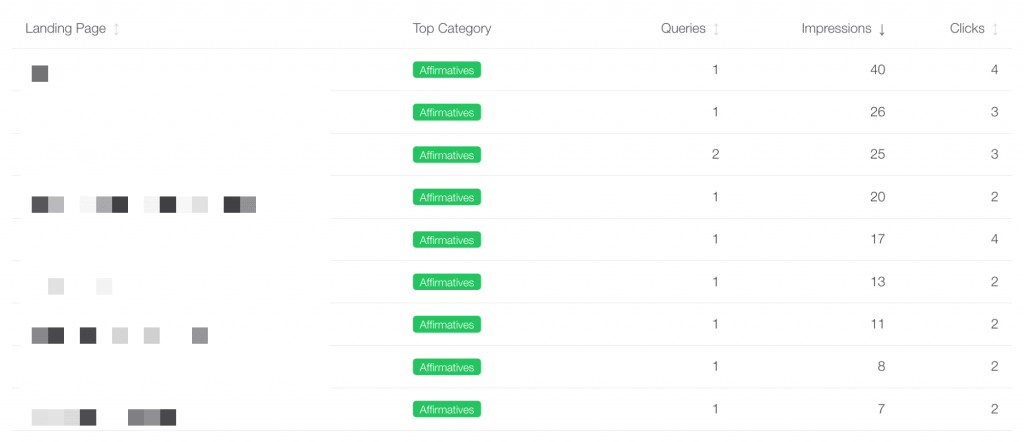
It’s interesting that these queries are distributed across the multiple URLs cited as sources, meaning these entries represent clear records of secondary, tertiary, and stacked interactions engaging directly with Google’s AI products.
If we then look at other official Google statements regarding how query data is collated within GSC, the ongoing logic dictates that a query must be searched at least 30 times by 30 unique logged-in users over a 13-month period. This could explain why volumes of these command queries are so low.
How we can use this information
Tracking these follow-up actions lets us look past basic click numbers and view counts for queries, it’s using GSC data in a different way.
It gives us a clearer picture of how well our content works when shown inside an AI answer. When someone asks the AI to sum up, explain, or clear up a point that comes from our site, it shows us exactly where the reader got stuck.
If we see lots of requests for simpler explanations or more context, it means the AI’s first answer was too complex, incomplete, or missed the main point. On the other hand, if we see positive follow-ups or thank-you prompts, it shows that our content provided a strong initial answer and led the user to ask about related topics.
By tracking these follow-up steps back to our website pages, we can improve our writing and layout. We can look to better answer follow-up questions directly on our pages before users need to ask the AI for help, making sure both human readers and AI systems get full, clearer answers right away, and potentially influence the synthesised response and achieve a more prominent brand touchpoint (increase both our AI visibility, and value of the touchpoint).


