The marketing funnel is breaking – Here’s what replaces it in the age of AI
AI-mediated discovery is changing how buyers find and evaluate information.
In many cases, potential customers now encounter brands through AI-generated answers rather than traditional search results. That means a prospect can read a summary of your expertise, form an impression of your brand, and move closer to a purchasing decision – without ever visiting your website.
For CMOs, this creates a strategic problem. If discovery increasingly happens inside AI platforms you cannot track, how do you influence and nurture potential buyers?
The answer lies in rethinking the traditional marketing funnel.
Why the traditional funnel is breaking down
Even if AI-generated answers regularly cite your brand and content in relevant responses, you can’t see, let alone measure, the impact of your efforts on consumer behaviour and purchasing intent.
You need to pull at least some of those interested searchers into content channels where you have more visibility and control.
A growing subscriber base is among the most valuable assets a business can have. This is a warm audience that has given you explicit permission to receive your content and marketing directly. A few hundred highly engaged subscribers are often far more valuable than hundreds of random brand mentions in channels you can’t see.
That’s because you can target them with strategic, personalised content and messaging. You can also track and measure how your content influences and nurtures these subscribers into leads and customers.
You may already have an email newsletter; perhaps a podcast or YouTube channel as well. If not, think about the kinds of exclusive, valuable content you can produce on a regular schedule that the right audience will happily sign up for.
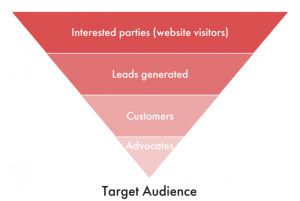
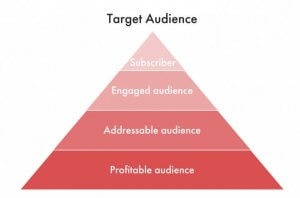
Old versus new approach to the funnel
 |
 |
|
Identifies markets by funneling your audience towards a conversion. Marketing is a support organisation for sales. |
Creates markets by turning a growing audience into a business asset. Marketing is a strategic function within the organisation. |
Retention matters as much as acquisition
Of course, your subscription magnet must be capable of competing in a highly competitive market.
Consider your competitors and other sources of similar content: Is the topic already covered to death elsewhere? Or is there a niche within the topic – such as a specific use case or customer challenge your brand can own – becoming the undisputed expert and go-to source.
Consider the channel: A new podcast is unlikely to get traction these days without an extremely original hook and format. A newsletter still needs to be opened, so how will you maintain interest month after month?
So, while attracting subscribers is vital, retaining them with regular, relevant, high-quality content is just as important. Every unsubscribe is a potential customer lost.
Subscriber acquisition and retention may become the most important metrics in your new content marketing strategy.
Channel silos are dead
Different marketing functions are adapting to the age of AI independently.
The solution is to bring together and align all disciplines with a single strategy focused on the same business outcomes.
AI doesn’t care that you’ve got a digital PR strategy, a social media strategy, an SEO strategy, and so on. (Your customers never did either.) It’s all grist to the same mill.
Now more than ever, content marketing can only succeed when all marketing functions operate as one, interdependent team aligned to the same goals and outcomes.
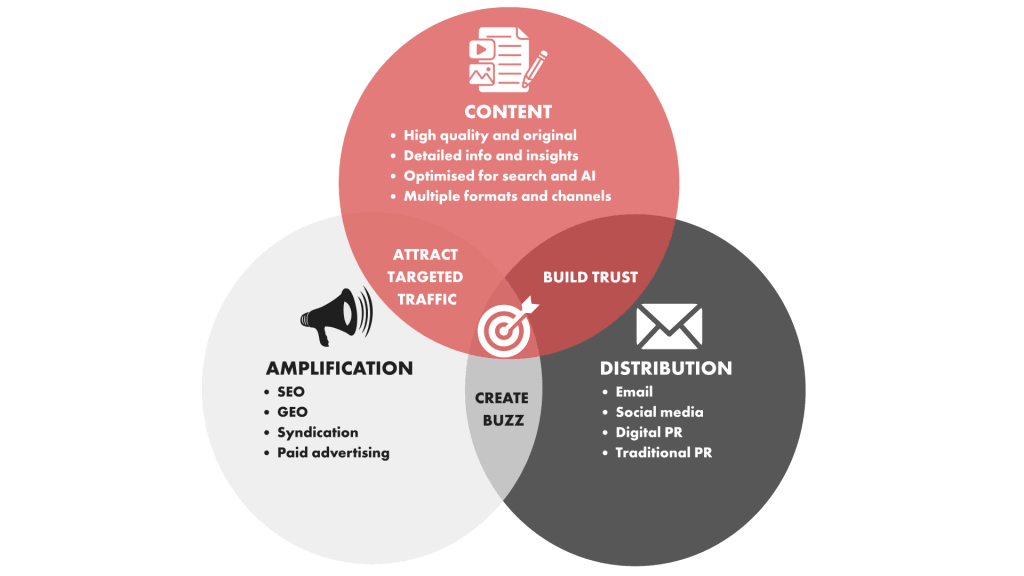
Continuing to treat these as separate initiatives carried out by different teams – each with their own priorities, goals, and KPIs – will kill your results.
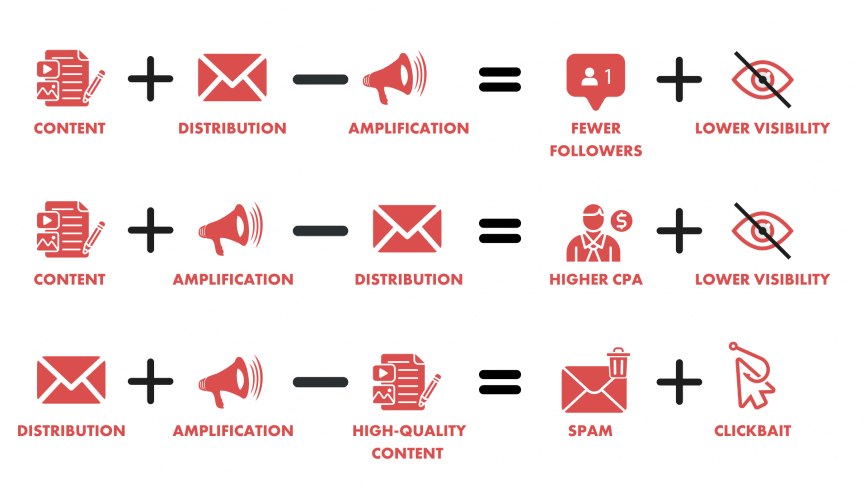
All of these elements need to work together as one.
Measuring your strategy in the age of AI
Search engine analytics don’t apply when it comes to platforms like ChatGPT, Claude, and Perplexity.
It’s time to rethink your usual metrics. Use brand monitoring tools to estimate how AI platforms might surface your content and track improvements over time.
The old rules about first- and last-click attribution fall apart when people research your brand and get value from your content in platforms you can’t track.
The LLMs powering these AI platforms work very differently from search engine algorithms. No two AI-generated answers are alike. Your content might be cited in one answer but not another in response to the same question. Ask the same question 20 times, and you’ll get 20 different results. So far no one has been able to predict or groom how AI returns information, even within the same LLM
This makes tracking brand mentions and content in AI more complex – particularly as, unlike Google Analytics, you can’t access data on actual user queries, conversations, and clicks.
Most monitoring tools – such as Brandwatch, Otterly.AI, Peec.ai, and Keyword.com’s AI Rank Tracker – get around this by running their own test queries instead. The data you’re seeing is the result of simulated scenarios, not genuine customer research behaviour.
It may be inexact, but you can still capture some useful insights this way.
- How often is your brand likely to appear in AI responses for relevant queries?
- How does this compare with your competitors?
- Which keyword prompts or questions usually trigger a brand mention?
- What is the likely context and sentiment surrounding these mentions?
- Which of your content sources are being cited?
What these tools can’t do is report or analyse the conversations that perhaps matter most: the private, multi-turn dialogues where customers carry out research and make an actual purchasing decision.
From cost centre to strategic asset
The shift to AI-mediated discovery isn’t just changing how content marketing works – it’s fundamentally altering what makes content valuable to your business.
This is the opportunity hiding in plain sight.
- Content marketing is no longer just a sophisticated lead funnel for Sales. It has become a strategic function in its own right. (Some would argue it always was, but hey-ho.)
- Amplifying your brand’s visibility in line with rapidly evolving consumer search behaviours
- Showcasing genuine expertise, exclusive insights, and original thinking instead of generic, recycled information
Attracting subscribers instead of chasing viral moments
When your strategy focuses on outcomes instead of engagement metrics, it becomes that much harder for the executive leadership in your organisation to view content marketing as anything other than essential.
- Content becomes a strategic investment in building a long-term competitive advantage, not just another marketing cost centre competing for budget
- Content operations stop being a drain on resources and become a profit driver that directly contributes to pipeline and revenue
- Measurement becomes transparent and attribution becomes clearerbecause you’re tracking business outcomes – brand authority, subscriber growth, marketing qualified leads – rather than vanity metrics that ultimately mean nothing to the bottom line.
While your competitors scramble to create more AI-friendly content or panic about declining click-through rates, you have the chance to build something far more powerful: a respected content brand that grows in authority, influence and, importantly, business value over time.
Your checklist for change
But where to start? Here’s a handy checklist:
- Review your personas and customer journeys to include AI-mediated search.
- Identify the likely queries, concerns, use cases, obstacles/objections and topics of interest for each persona and stage of the customer journey.
- Audit your existing content for quality, ongoing relevance, depth, accuracy, appeal, and AI compatibility. (Your SEO team should be able to help with this last one.)
- Prioritise and triage any assets in need of uplift according to their strategic value and the scale of work required. Archive low scoring, low value content.
- Map viable content against your list of topics and queries to identify gaps where new content is needed.
- Prioritise any new content to be created according to the strategic value.
- Audit and clean up any existing subscriber lists. Plan how you will actively grow your lists while providing more value to subscribers.
- Create your internal content workflows with enough time, budget, editorial rigour, and cross-team collaboration to ensure each asset achieves the necessary high quality.
- Build your content calendar according to your workflow timings and content priorities.
- Schedule regular reviews with the team to monitor progress, make adjustments and maintain alignment.
What role can generative AI play?
Only 11% of enterprise content marketers rank AI-generated content as “excellent” or “very good”, according to CMI’s 2025 Enterprise Content Marketing Benchmark report. With 49% of marketers ranking the quality as merely Good, it’s fair to say that AI-generated content is now the minimum bar.
When everyone has access to the same AI tools, good is not good enough.
But AI does have a role to play – ideally freeing up creatives from less creative, more functional tasks to focus more time and energy on high value content. Think: generating interview transcripts and automating routine processes, or copywriting straightforward FAQs and product descriptions.
Just don’t expect AI to replace your talented team of writers, creators, designers and subject matter experts.
Next steps
If you need expert help with AI discovery, content marketing, or SEO for AI, we can help. Get in touch.


