Trust and social proof in the AI era: Why your content visibility is worthless without reviews
Imagine you’re shopping for a new toaster online. Toaster one boasts a thousand reviews and an average 4-star rating. Option two has just three reviews but is rated 5/5 stars. Which do you choose?
The first toaster, right? It might have a slightly lower average score, but it has way more genuine reviews. More reviews equal less risk, which increases consumer trust.
For years, reviews have been treated as a conversion tool: SEO brings the traffic, visitors read your reviews for social proof and, as in the toaster example, are persuaded to buy.
But in the age of AI search, that has changed. Reviews increasingly determine whether your brand even appears in an answer before anyone visits your website at all.
This doesn’t mean reviews are suddenly less important. In fact, they’re more important than ever.
Reviews have moved upstream in the AI era
Reviews should be an essential part of any content strategy.
They’re influential in the purchase process for everything from ecommerce products to hotel bookings. An estimated 93% of consumers read reviews before buying an item. This influences which products shoppers choose, services they book, and how they perceive a brand. But there’s even more to it than that.
With the rise of AI search and hundreds of millions of people using ChatGPT to shop, discover, and compare products, according to OpenAI, the influence of reviews is more prevalent than ever. Where reviews used to influence the buying decision, now they influence discovery itself.
If AI decides your brand isn’t sufficiently trusted to include in a recommendation, customers will never reach the point where they will see your reviews, let alone be persuaded by them.
Ignoring and failing to use reviews effectively could be the downfall of your search and AI visibility. Search engines and AI tools, including large language models (LLMs), use customer reviews to look for signs of legitimacy and trust when considering what to cite and present to users, in which genuine reviews play a big part.
Improving SEO and AI visibility
Reviews have a vital role in SEO strategies, and strong SEO is the foundation of AI visibility. If you’re not discoverable in traditional search, what chance do you have in AI search?
Reviews help boost SEO performance in a few key areas:
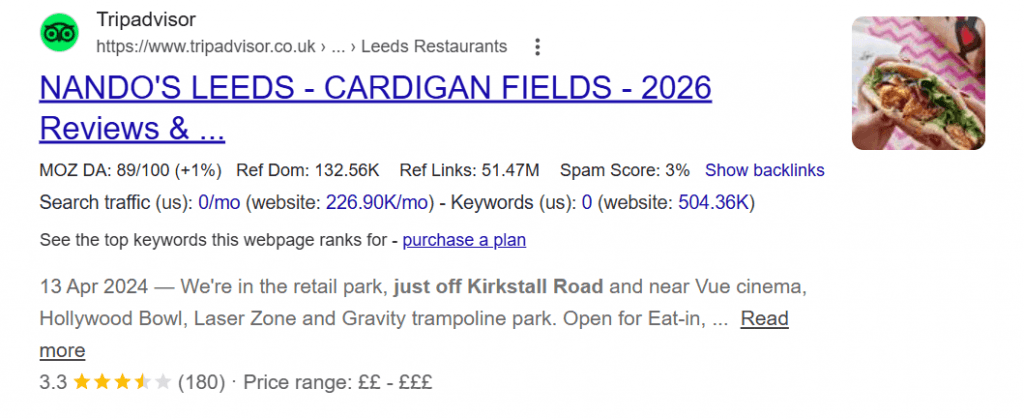
- They’re an important ranking factor within local search, improving visibility for stores, restaurants, and hotels. Search engines consider the quantity, quality, recency, and relevance of reviews when determining local search rankings.
- You can manage customer Google reviews and include them in your Google Business Profile. This appears in the SERP and signals to Google that a business is highly rated and active.
- Applying a review schema makes content and reviews easier for search engines and AI tools to understand. It pulls through star ratings for specific products and services directly into the SERP. This demonstrates trust and helps encourage potential customers to click through.
- High visibility of reviews can help improve click-through rate (CTR). More clicks, traffic, and organic sessions are a positive sign to search engines that the content is high quality and relevant, improving its ranking potential.
Trust building
Google rewards original, high-quality content that demonstrates Experience, Expertise, Authoritativeness, and Trustworthiness (E-E-A-T). To appear in Google AI Mode and AI overviews (AIO), your content must satisfy E-E-A-T – it has to be expertly written and demonstrate authority in a way that serves the user’s experience and builds trust. These are also crucial qualities your content must meet for LLMs and AI-driven search engines to surface content.
And what better way to demonstrate trust and experience than with lots of independent reviews from real customers? Search engines and LLMs identify and process reviews to build a bigger picture of your brand, understand its reputation, and determine whether they should trust you and your content. If they’re not readily available for discovery, how can that trust be built?
Increasing citations
Researchers from Yale and Columbia universities found that AI shopping agents quantify reviews to determine their recommendations. Tools like Claude, Gemini, and ChatGPT prioritise average star ratings and total review volume when deciding what products, services, and content to cite in their responses.
Generally, having more reviews and higher ratings means your content is more likely to be surfaced in AI search. Brands with plenty of recent, positive reviews across third-party platforms like Trustpilot help AI verify their existence, current activity, and reputation.
Simply pasting some reviews on your own website isn’t enough. AI tools focus on trusted and verified reviews, and most only cite brands with a minimum three-star average review rating.
(Read more about AI citations.)
How reviews influence AI visibility
AI qualifies, quantifies, and verifies online customer reviews to gain a greater understanding of your brand, its products and services, as well as its level of trust. Essentially, the information LLMs interpret from your customer reviews impacts whether you appear in AI recommendations.
Your visibility (or invisibility) comes down to what your customers say. If what they’re saying is good, you want to make that obvious.
Contextual understanding
Reviews offer another source of information for AI-driven search engines and LLMs to build their understanding of your brand. The use of natural language processing helps them comprehend the sentiment and context of reviews beyond simply analysing the number of reviews and their star ratings.
AI crawlers can understand the intent, emotion, and reason behind reviews, taking a deep dive to scan reviews for common and consistent keywords and terms. This helps build a picture of the brand, including its location, popular products or services, common topics and features, and even some demographics of reviewers.
Entity SEO and layered trust signals
LLMs don’t just take information from your website as the only source. They scour all information available online about your brand to understand it and build an entity profile.
This profile is a distinct, named thing (like your brand), which AI systems identify, categorise, and connect. Your reviews are vital for entity SEO as they provide an additional source for verifying details such as your brand name, location, products and services, and topical authority and relevance.
This adds another layer of trust signals for AI and LLMs to determine that your brand is real and provides the products or services listed on your website. A wider online presence beyond your own website lets you build more trust signals and layers, increasing entity depth and opportunities for AI surfacing.
Content freshness
AI favours fresh content for citing, including newly published and frequently updated pages. Refreshing current content and updating the page to show when it was last changed or reviewed supports this by elevating your existing resource.
Reviews offer a continuous stream of user-generated content (UGC) linked to your brand, ensuring ongoing new content with little effort on your part. This supports the content-freshness preference for LLMs and shows that the business is still active and relevant.
Reputation understanding
AI-generated search engines and LLMs aren’t just focused on helping users. They also want to protect their own reputation. They prioritise recommending highly reputable and relevant brands based on prompts and queries to maintain and grow their user base.
Reviews are a great source for understanding brand reputation. Like humans, LLMs assess the quantity and quality of reviews to identify those with a strong, established reputation in a particular field. They then use this information to determine which specific products, services, and brands to recommend.
LLMs don’t want to recommend poor-quality products or services, as they’ll damage their own reputation. Good reputation understanding helps them make accurate and valuable suggestions.
Where to use reviews within your content effectively
Third-party sites like Trustpilot, Tripadvisor, Amazon, and Yell are where many of your reviews appear. However, there are ways to incorporate these and other reviews into your website content to build trust and support your AI strategy.
Remember, reviews are proprietary and they are original content that AI cannot invent (but can summarise).
Homepage
Your homepage is the first place many new visitors land. The same is true for LLMs and search crawlers, so promoting your positive reviews and an average star rating instantly sends strong trust signals.
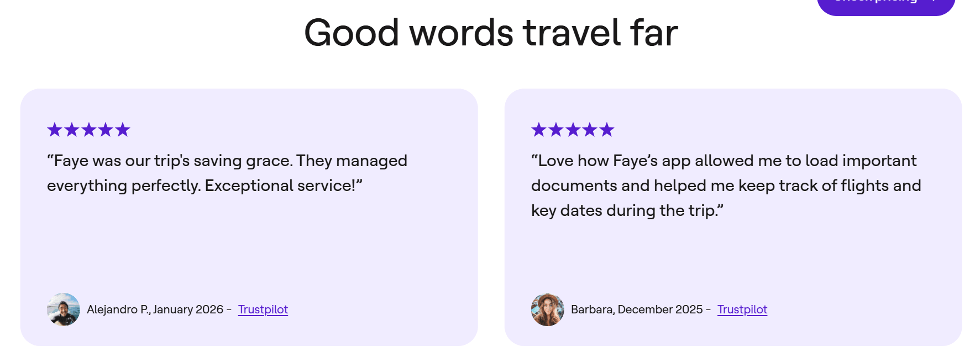
Linking to the source provides additional verification. For example, integrating and linking to reviews from Trustpilot is a common practice to include the latest reviews and ratings, keeping content fresh and claims accurate.

Product pages
Ecommerce brands should always include a product review feature. Customers expect it. Just look at the success of Argos and Amazon, where 95% of shoppers read product reviews.
No reviews equals no trust equals no customers.
Positive reviews can be the difference between a lost sale and a conversion at the bottom of the funnel (BOFU) stage on product pages.
Add review schema to help search engines understand the review section of the page and to pull through ratings into the SERP.
Social posts
For real social proof, share links to positive reviews across your social media channels. Simple posts that highlight longer (and positive) reviews instil trust for people who discover your brand via social media. It also helps build your entity profile.
Case studies
Case studies are reviews with context and evidence of outcomes.
A dedicated case study or customer review hub provides an opportunity to show expertise across different industries. It helps connect with humans who may find an example that aligns with their needs, creating trust.
For AI and search engines, using case studies adds depth by incorporating real-world storytelling and demonstrating expertise across sectors. LLMs and search engines use case studies to better understand relevance, expertise, and trust for products and services linked to your brand.
Unlike reviews on third-party sites, you have full control over the contents of case studies (but should always seek approval from the individual or company named).
Online reputation management for handling negative reviews
Reputation is no longer just what customers think of you. It’s also about what AI can conclude about you.
Bad reviews happen. A handful aren’t much to worry about. After all, would you trust something if it had nothing but five-star ratings? Unlikely. Even the best brands and products aren’t perfect, after all.
Transparency is key to demonstrating authenticity. Humans, search engines, and AI can detect lots of fake reviews.
However, online reputation management can still help if you receive many poor reviews and your overall rating starts to fall. Handling negative reviews through engagement shows your brand is active and talks to its customers:
- Set up alerts for any new reviews of your brand across commonly used review platforms
- Respond within 48 hours to show active listening and engagement
- Be professional and polite to encourage any other readers of the review that you’re responsive and that you care
- Assess and address recurring themes and make it clear that action has been taken
- Encourage positive reviews from satisfied customers through incentives to dilute negative ones.
Integrate reviews into your content effectively with SALT
Leveraging reviews is an important part of any effective content strategy. At SALT, we can help you determine how and where to use customer reviews in your content and SEO strategies to boost AI visibility.
Contact us online to discuss your current content, reviews, and AI visibility goals and learn how we can help.


