The Role of SEO and GEO in Tourism 5.0
The travel world is shifting. Digital travel focused on speed, automated check-in counters, and click-driven search results. Tourism 4.0 treated visitors as data points and hotel rooms as inventory to clear.
Tourism 5.0 changes the goal as the AI movement focuses on human care, community health, and nature as it becomes harder to differentiate value propositions in a noisy, samey marketplace. Technology isn’t (yet) replacing people; it’s creating smart tools that reduce logistical friction so people can connect.
This shift changes how people find and book their trips as travellers no longer scroll through long lists of blue links on search pages. They talk directly to artificial intelligence tools, digital assistants, and smart planners. Travel brands need a new kind of expert to navigate this space. That expert is the SEO and GEO engineer.
Four pillars of a human-centred movement
Tourism 5.0 rests on four core ideas that guide how technology should serve travellers and host towns.
Earlier travel systems focused on automated efficiency. Self check-in kiosks, mobile keys, and pricing algorithms aimed to reduce friction by removing human contact.
Tourism 5.0 changes this priority, as technology should handle administrative work so humans can share stories, offer hospitality, and connect. Virtual tools exist to prepare travellers for their arrival, introduce them to cultural expectations, and match their interests with local experts.
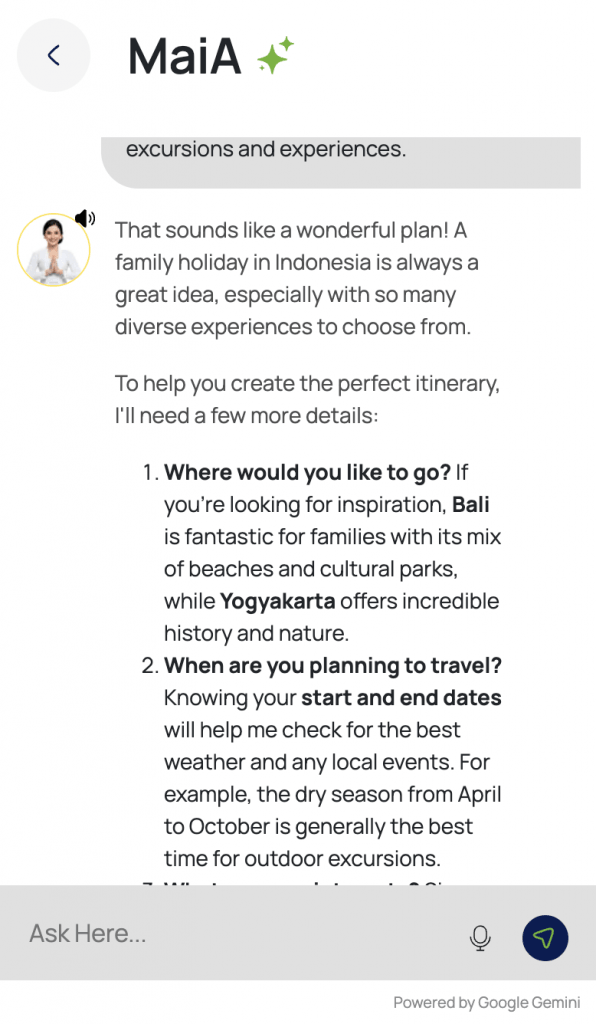
Indonesia provides an active blueprint with Maya, an AI travel assistant hosted on indonesia.travel.
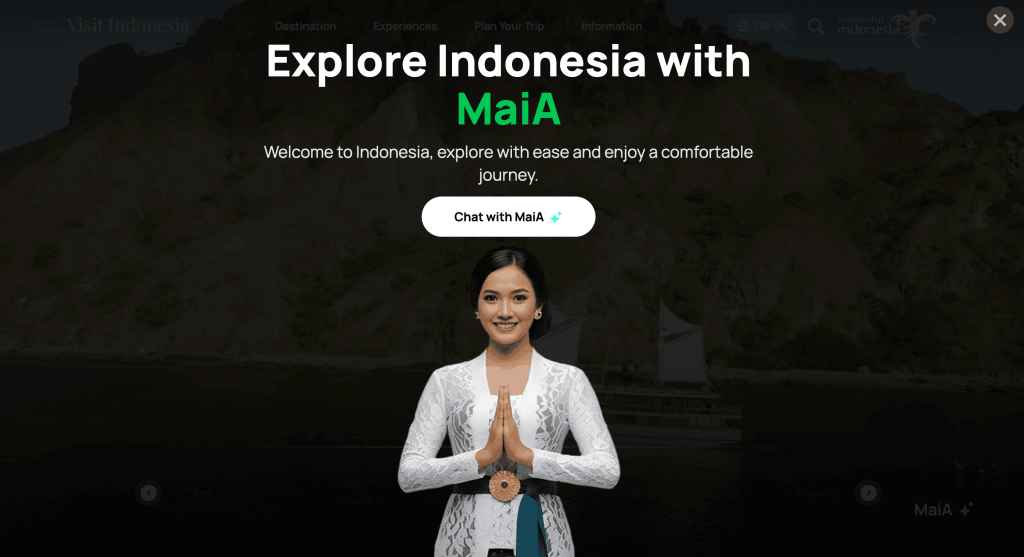
Maya doesn’t push generic travel packages. The assistant asks visitors about their available time, personal budget, and cultural interests. It builds custom travel plans that connect visitors with small tour guides, village homestays, and neighborhood craft stalls. Technology handles the scheduling, while local hosts deliver the human warmth.
Accessible travel often gets reduced to wheelchair ramps or elevator buttons. Tourism 5.0 defines inclusion as a baseline right that covers physical movement, sensory balance, dietary safety, and cultural understanding.
A family traveling with an autistic child needs clear details about noise levels, lighting, and crowd density. A traveller with limited mobility needs verified measurements of door frames, shower access, and street paving. If digital systems fail to share this data clearly, people face anxiety and exclusion before their trip begins.
Platforms such as access@tour demonstrate how inclusion works in practice. The system audits destinations for physical, sensory, and linguistic accessibility, then stores that information in standardised digital formats.
Travel planners and search assistants can read this data to match travellers with venues that meet their exact needs. Inclusion becomes an active part of discovery, not an afterthought.
Sustainability and community resilience
Earlier systems chased visitor numbers. Destinations measured success by foot traffic, flight arrivals, and hotel occupancy rates. This race for volume created crowded streets, rising living costs for residents, and damage to natural heritage sites.
Tourism 5.0 measures success by community health, economic resilience, and environmental balance. The focus moves from growth to stewardship. Destinations use digital tools to monitor footfall, predict peak crowds, and protect fragile ecosystems from strain.
The European Union initiative FU-TOURISM 5.0 puts this approach into action.
The project works directly with small and medium tourism businesses to guide them through green and digital transitions. Operators receive guidance to track carbon footprints, eliminate waste, and build business models that survive seasonal drops or extreme weather. Technology becomes a shield for local resilience rather than an engine for unchecked growth.
Direct economic support for local makers
Big digital travel agencies take large cuts from every booking. Family-run guesthouses, artisan workshops, and independent guides pay high commission fees just to show up on search pages. This setup drains wealth away from host towns and sends profits to distant tech platforms.
Tourism 5.0 decentralises discovery as open data standards and smart digital agents allow small businesses to display their offerings to global visitors without paying high platform fees. A ceramic artist in a mountain village can list open workshop hours, material sourcing details, and direct payment options on public digital networks.
When search engines and AI assistants pull information from these open networks, travellers book directly with the maker. Money stays inside the neighborhood. Local communities build lasting wealth on their own terms, while travellers enjoy unique, authentic encounters that no corporate package can match.
Why has travel discovery changed?
SEO once had a straightforward recipe. You picked popular keywords, bought external links, and created long articles to rank on page one.
When a traveller uses an AI assistant, they ask full conversational questions. A traveller might ask for a three-day walking tour of mountain villages with step-free paths and quiet family restaurants.
The AI system doesn’t look for keyword density. It scans knowledge graphs, checks verified reviews, and reads structured facts. If a business only exists as a promotional blog post, the AI planner will skip it. The AI needs clean, verified facts that it can trust and recommend.
The work of the SEO/GEO
The SEO and GEO engineer bridges the gap between local culture and modern search engines. This role combines technical skill with community care.
The mandate has changed fundamentally. An engineer no longer builds content, earned mentions, or external placements just to chase rankings, relevance, and topical authority for a search engine crawl. The real objective is to shape the brand’s long-term digital footprint and training data.
Large language models form their knowledge across two distinct layers:
- Live retrieval
- Base training data
When a brand publishes a guide, earns a feature in a regional publication, or secures a place in an open cultural database, those assets don’t just serve immediate retrieval pipelines.
They become part of the web-scale text datasets collected to train future foundation models. If a brand is absent or inconsistent across these open sources, it remains invisible within the weights and core memory of future models. Every digital placement is an active investment in how machine models learn, understand, and recall the brand.
Structuring verified facts
AI tools read structured code known as schema. An SEO and GEO engineer turns a hotel, trail, or restaurant into a clean digital record that’s digestible in various formats.
This data goes far beyond standard addresses. The engineer marks up exact doorway widths, quiet hours, local ownership records, and green certifications. These precise attributes provide verified context that artificial intelligence models require before recommending an experience. When an AI search engine looks for accessible and sustainable travel, this structured data makes the business visible and verified.
Building the brand footprint and training data
Marketing teams often treat external placements as temporary tactics to acquire backlinks. An SEO and GEO engineer views every external placement as permanent training material for future generative models.
LLM systems crawl encyclopedic sites, regional news, open public databases, and community discussions to understand which entities matter. The engineer works to ensure that mentions across these external spaces describe the brand with complete factual precision. When travel guides, government cultural directories, and community forums describe a local operator with consistent details, language models learn that relationship as an established fact.
This continuous digital footprint prevents model hallucinations, cements brand identity, and ensures the business appears naturally when travellers ask open questions. The brand becomes a foundational reference point inside the model rather than a fleeting search result.
Connecting to real-time data
Overtourism harms historic sites and frustrates residents. A modern engineer connects website data with live sensors and digital twins.
In Colombia, planners use digital models of historic locations to track crowd size and visitor movement. If a famous landmark reaches capacity, the digital twin detects the surge. An engineer connects this system to AI search engines. When visitors ask for suggestions, the AI suggests nearby artisan markets or secondary viewpoints. This spreads foot traffic and protects heritage sites from wear.
Helping small businesses stand out
Large hotel chains have big marketing budgets. Small family businesses do not.
The SEO and GEO engineer helps small operators set up open digital profiles. By listing products on open maps, local business registries, and verified directories, small operators enter the databases that large language models read.
A small guide service gains the same visibility as an international tour company without paying third-party booking commissions. In doing so, the engineer enriches the public web with diverse local knowledge, ensuring that smaller cultural voices become a permanent part of the machine intelligence landscape.
Tourism 5.0 SEO/GEO
Tourism 5.0 turns travel technology into a tool for good. When search and generative systems highlight authentic stories, verified accessibility, and non-manipulative marketing practices, everyone wins.
Travellers enjoy smooth journeys free from misleading information. Small business owners keep their earnings. Host towns protect their neighborhoods and natural resources.
The travel SEO and GEO engineer builds the bridge to this future. By organising real-world truth into formats that AI engines understand, they ensure that digital discovery supports human connection, equity, and care.


