How AI search audits map your brand in the generative era
Search is changing as machine intelligence becomes a more integrated part of daily results.
While traditional SEO was designed for a world of blue links and keywords, modern search is increasingly shaped by Large Language Models. These systems, such as ChatGPT, Claude, Perplexity, and Gemini, are shifting how users find information across various surfaces.
If your brand is not visible or trusted within these responses, you may see a decline in relevance as user behaviours continue to adapt.
What is an AI search audit?
An AI Search Audit is a diagnostic of your digital presence through the lens of machine intelligence. It recognises that search is moving toward a more conversational and synthesised experience. Unlike a traditional audit that focuses on how a site ranks for specific keywords, this process analyses how modern systems find, interpret, and recommend your brand.
This audit helps marketing teams understand how AI influences search results. We look at three main areas. Selection involves evaluating whether a system chooses your brand as a primary source for a query. Sentiment covers the tone and bias the system adopts when describing your products. Accuracy involves ensuring that the information surfaced is factual and helpful rather than distorted.
SALT’s methodology: Testing for practical direction
In a field that is still emerging, SALT uses a testing process to provide clear direction. We use a framework that has been refined through many synthetic queries to ensure our advice is actionable and based on how modern search systems actually operate.
A benchmarked approach
We use a testing environment that simulates how various models respond to specific brand signals. This is important because user behaviour is evolving. Many people are moving away from short keyword strings and are instead using natural conversations.
By running tests on onsite changes, we have developed a set of steps that help influence how often a brand is mentioned in these new types of search journeys.
Quantifiable direction and outcomes
Every recommendation in our audit is tied to a metric.
We measure Selection Frequency, which tracks how often your brand appears compared to your competitors. We also calculate an Overall Weighted Score for your digital presence. This determines your level of Resonance, which we define as the clarity of your brand information within the modern search ecosystem.
To see how this works, consider two common scenarios we find in our scoring.
The first scenario involves a brand with a high overall score of 4.19 out of 5, which suggests strong resonance. However, a deeper look often reveals a bottleneck. For example, a brand may have a high Technical AI score of 4.8 but a low Reputation and Safety score of 2.8.
In this case, the brand is technically visible but the systems may not recommend it because external sentiment signals muffle the brand information.
In a second scenario, a brand might have an excellent Visibility score but very low External Corroboration. This suggests that while the brand’s own content is prepared for modern search, there is no external evidence to back up its claims.
Since modern search systems look for consensus, they may choose a competitor who has more mentions in forums or independent reviews. Identifying these gaps helps move a brand from being a source of data to a trusted recommendation.
Our five-dimensional audit framework
We view the web as an interconnected network of information. Our audit evaluates your presence across five specific areas.
AI visibility and onsite readiness
A system must understand your brand before it can recommend it. While traditional SEO focuses on keywords, modern visibility relies on the depth of the information provided.
We evaluate how your content fits into the retrieval windows used by modern systems. This is not about a specific tactic to segment text. It is about ensuring your information architecture allows a model to extract the right passages to answer questions.
This involves mapping relationships between topics and providing the context that systems need to build a complete answer.
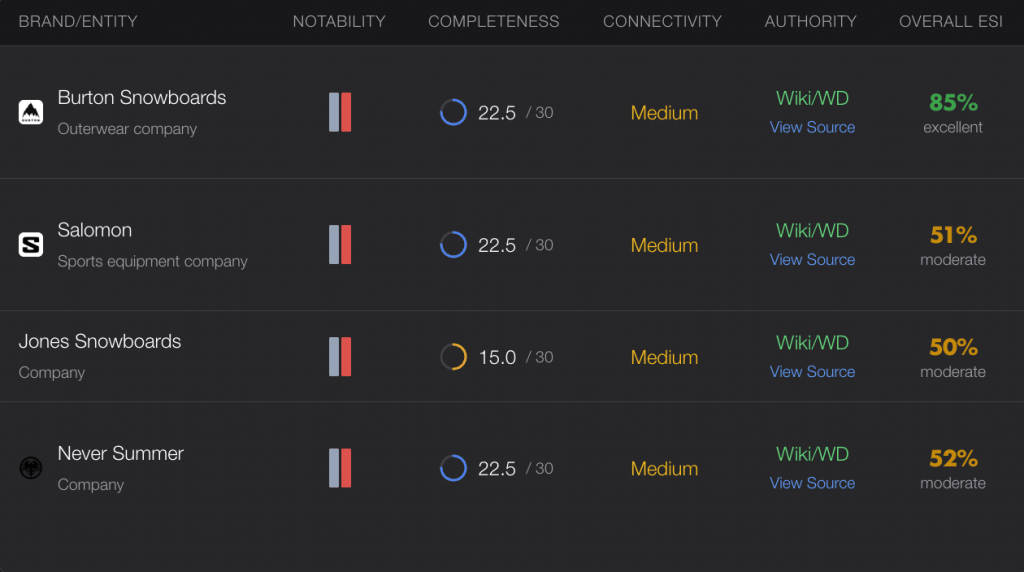
We also look at your brand as an entity, and how it scores against other brands in the same space as either a weak or dominant canonical.
Reputation, sentiment and brand safety
Modern search systems are designed to be helpful and safe. If your brand is linked to negative sentiment or unreliable topics, the system may suppress your mention to avoid giving bad advice.
We audit your reputation by looking at how your brand is described when the system is given freedom to answer. We look for signals in third-party reviews or controversies that could cause a system to muffle your brand information to reduce its own risk of providing incorrect details.
Technical AI
Technical AI looks at the architecture that allows machines to read your site. It acts as the bridge between your server and the crawlers that power modern search. We audit the technical layer of your site and test specific instructions for AI crawlers.
We check for stability and accessibility, such as verifying that your settings allow training agents to fetch your content. We also ensure that security rules do not accidentally block legitimate crawlers when they try to read your site.
Backlinks, citations and external corroboration
In the current environment, a backlink acts as a form of corroboration. Modern search systems verify information by looking for consensus across the web. Our audit examines how the world’s view of your brand matches your own messaging.
We look for brand mentions and expert quotes in forums, news sites, and papers. Independent citations act as amplifiers that help strengthen your resonance within the search knowledge base.
AI / search presence and selection
The final pillar shows your actual observed presence in search results. Using synthetic tests, we measure how often you are selected compared to your competitors. We look at how broadly your brand is covered across different types of questions.
For example, we test whether your brand appears naturally as a default answer for a general query or if it only shows up when someone asks for it by name. We also evaluate how systems respond to the fact that users now expect immediate and conversational answers.
The SALT advantage: A data-driven roadmap
Many agencies treat an AI audit as a simple technical audit. At SALTs, we see modern SEO as a branding channel driven by data. Our audit does not just provide a list of fixes. It provides a roadmap to help your brand become a reliable and visible presence.
By looking at these five areas, we provide a clear plan to help your brand show up more often and more accurately in search results.


